All artworks are made by marks, and a mark is the trace of time. (James Elkins)
We are obsessed with time, mostly with our inability to stop or slow its continuous flow. Time has that one essential quality; it will always move on, regardless.
In time-based art forms such as Music, Literature, Film, Dance and Performance, the narrative will reveal itself one step at a time. Painting has a different orientation. While making a painting, one motion still follows another, yet in the end, when the painting is complete, all activities that have taken place are visible simultaneously. The time and energy it took to make the painting is compressed within the singularity of the final artwork.
I am fascinated by the idea that an artwork embodies the time-signature of its origin. In fact, every object inherently represents the conditions of the time it was conceived and materialised. It epitomises the spirit of the times. A painting captures the quality of a process at a specific time and place.
In ancient Greece, the dual nature of time was acknowledged by identifying the measurable aspect as Chronos, and the quality of time as Kairos.
Chronos refers to clock time and is counted and measured in seconds, minutes, hours, days, and years. Kairos, on the other hand, refers to subjective lived experience, the characteristic quality of a moment, duration, event, occasion, or season.
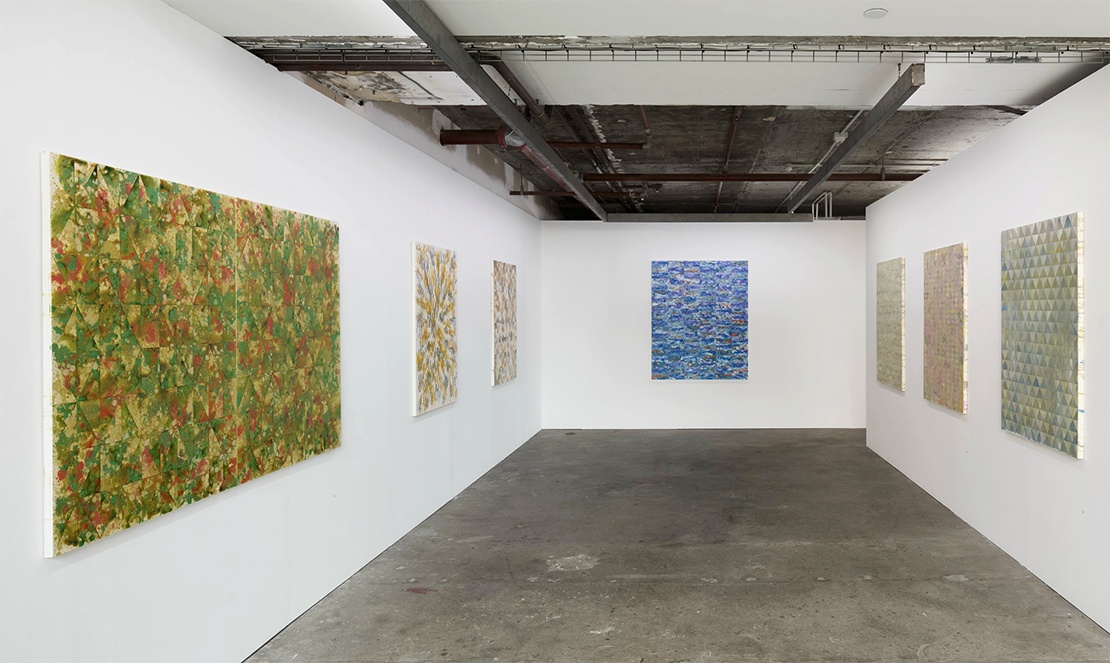
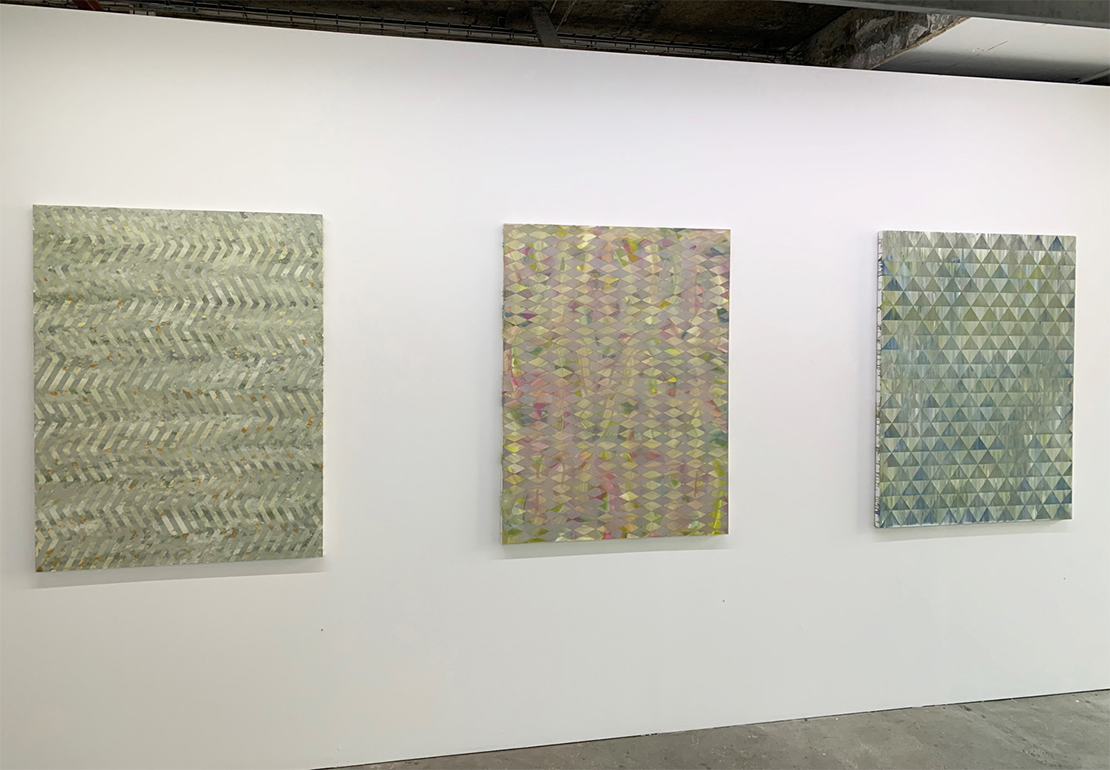
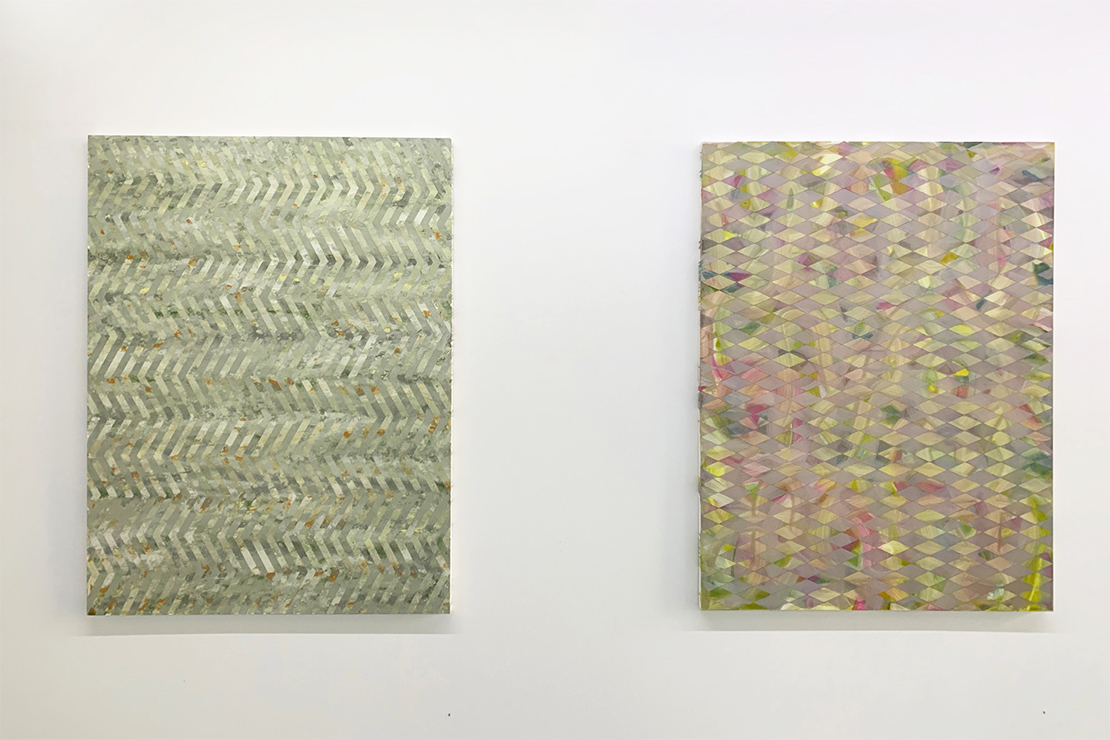
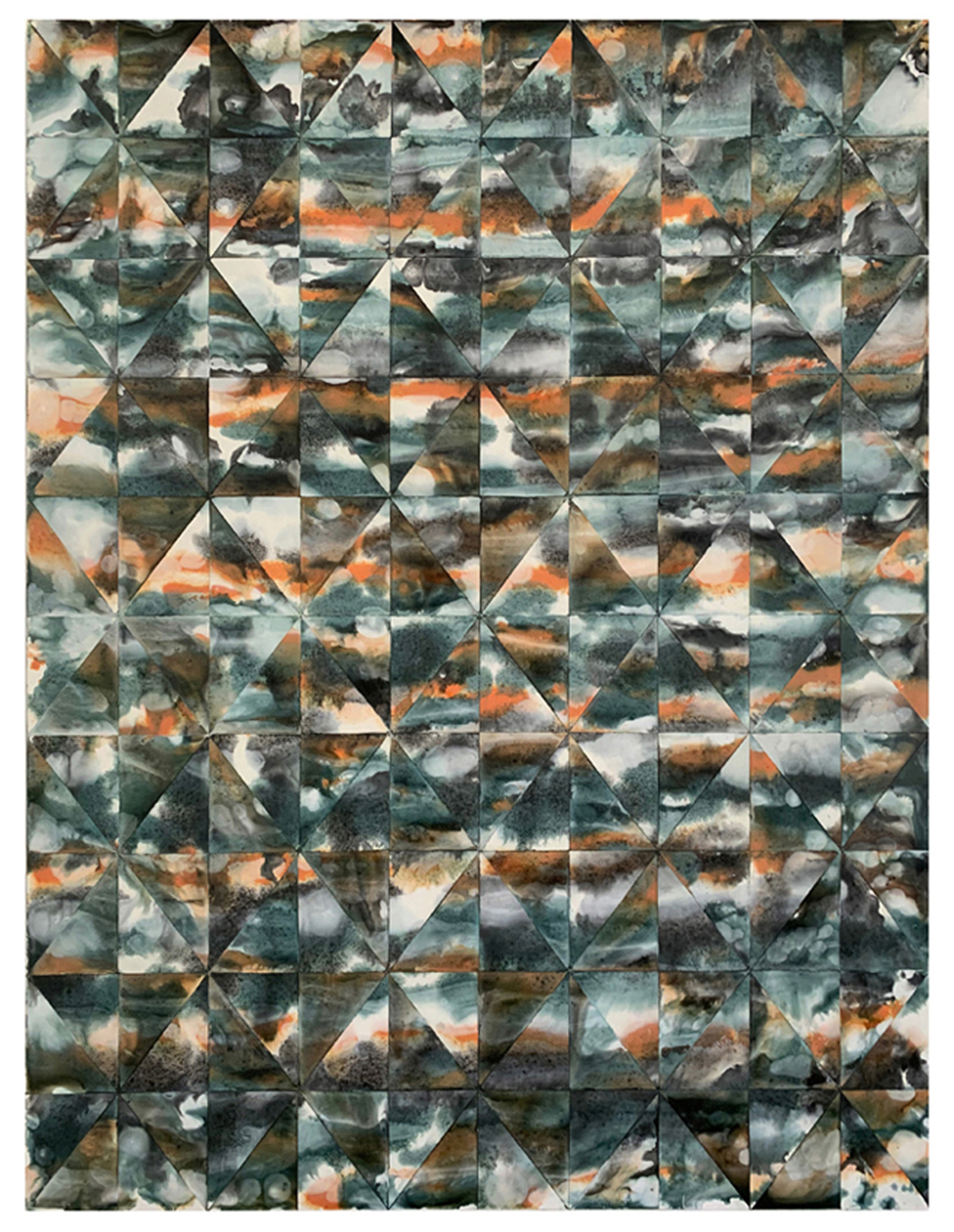
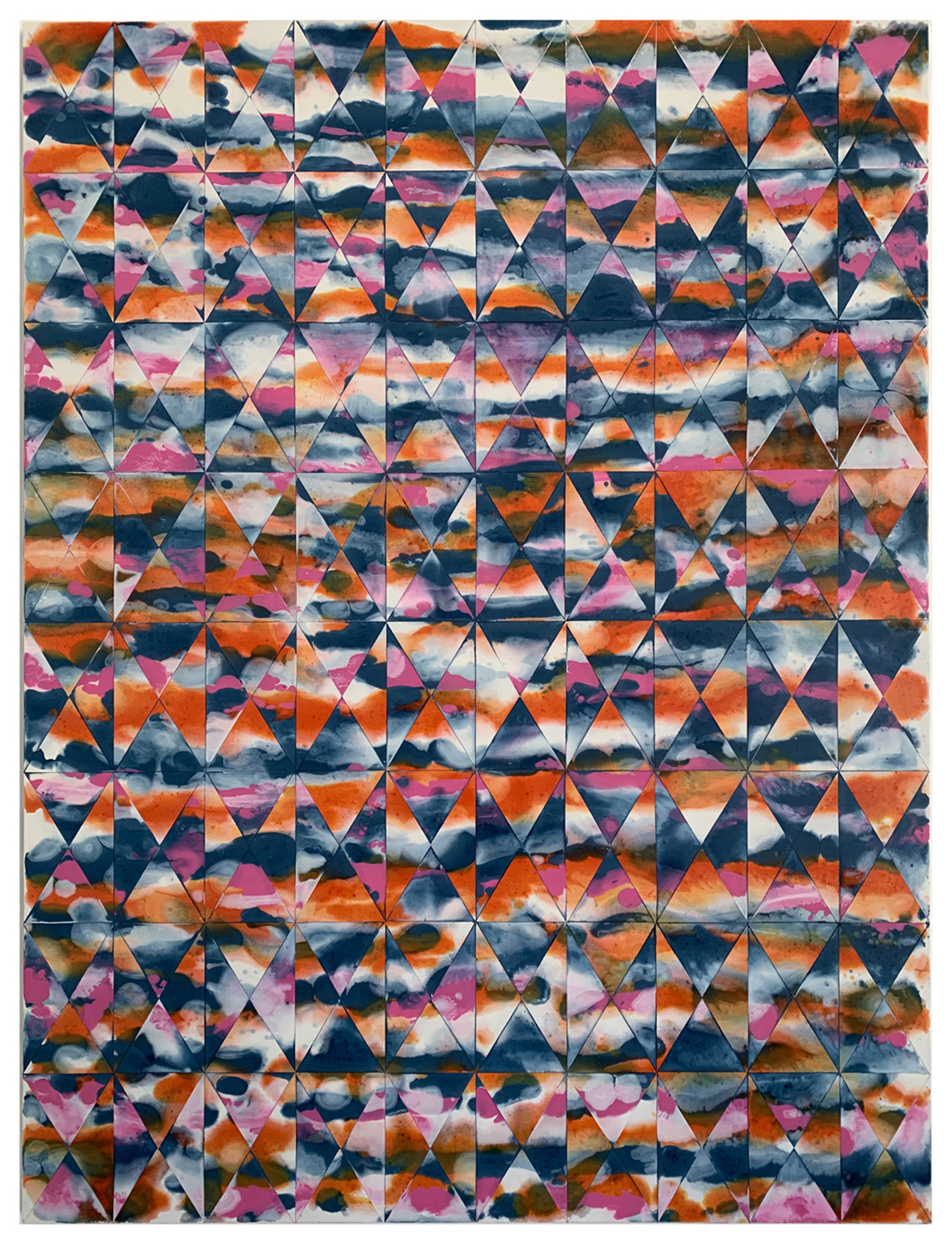
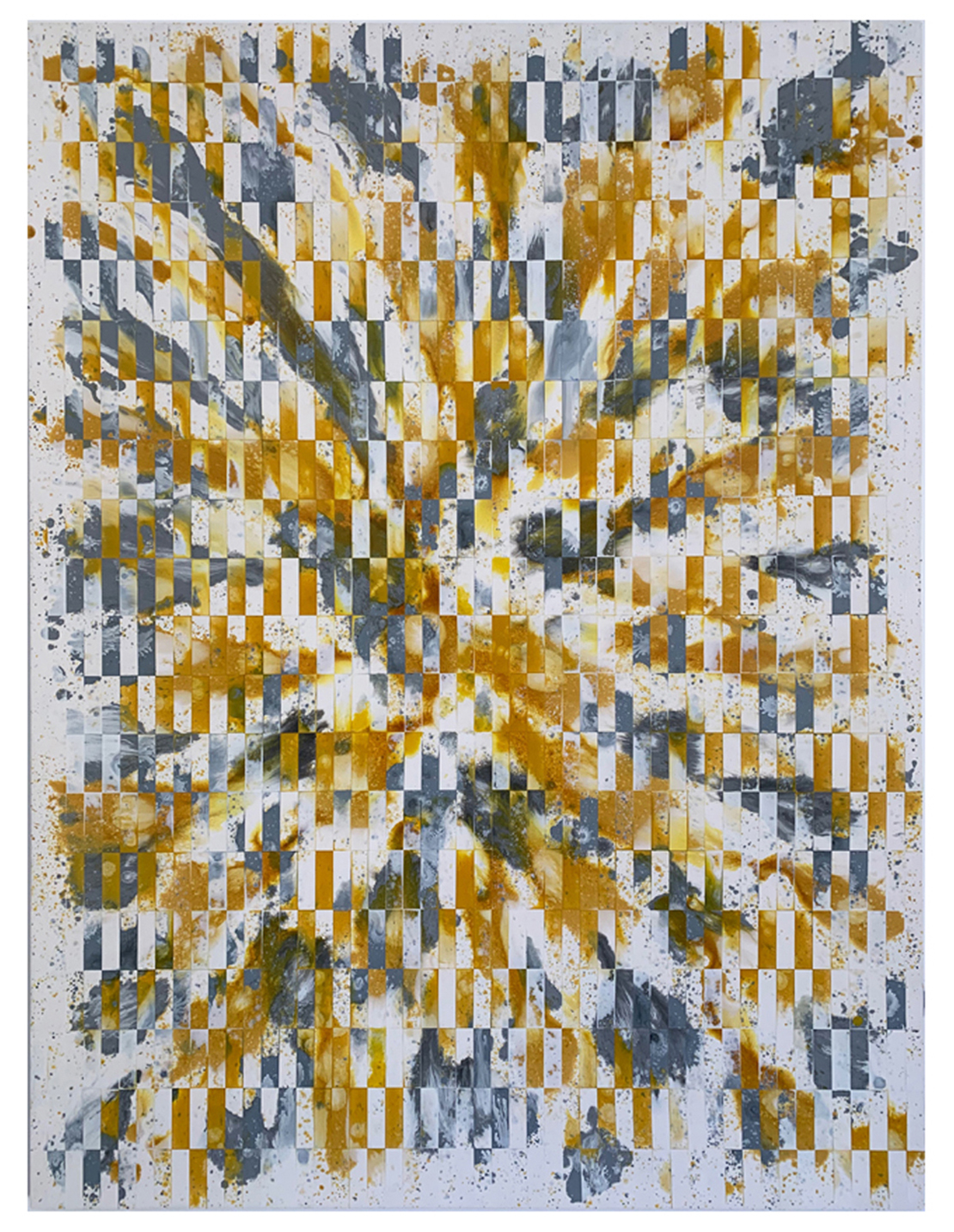
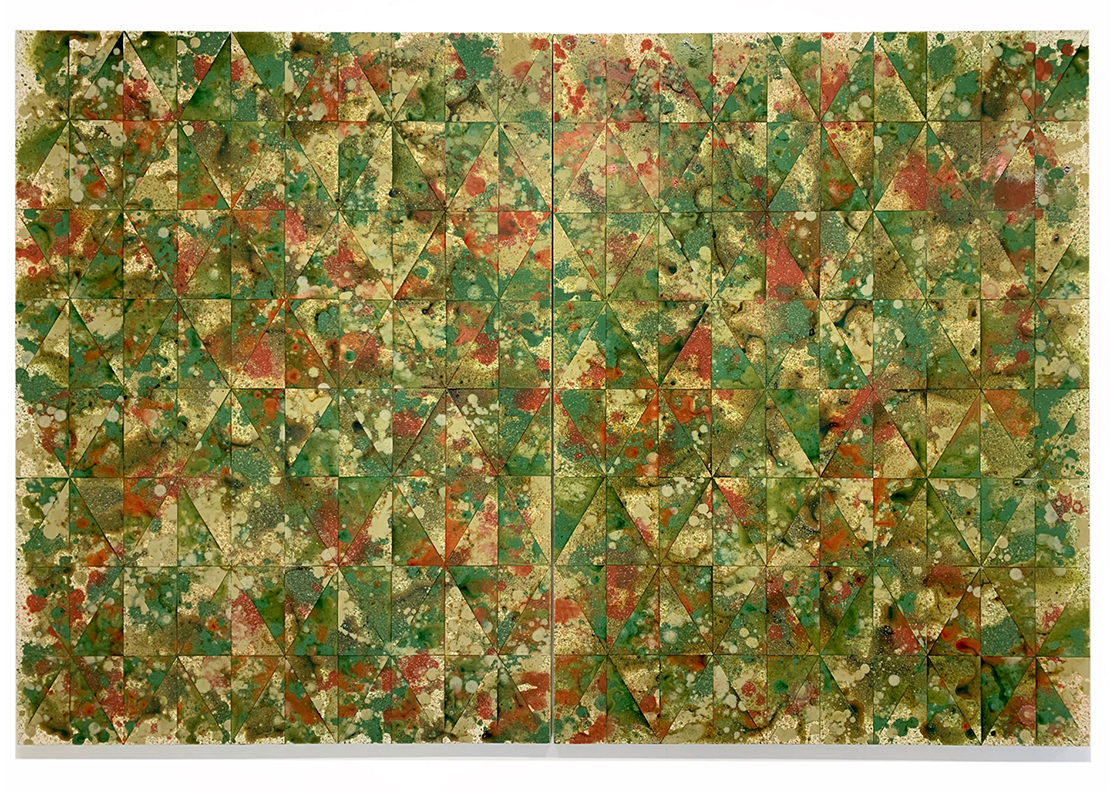
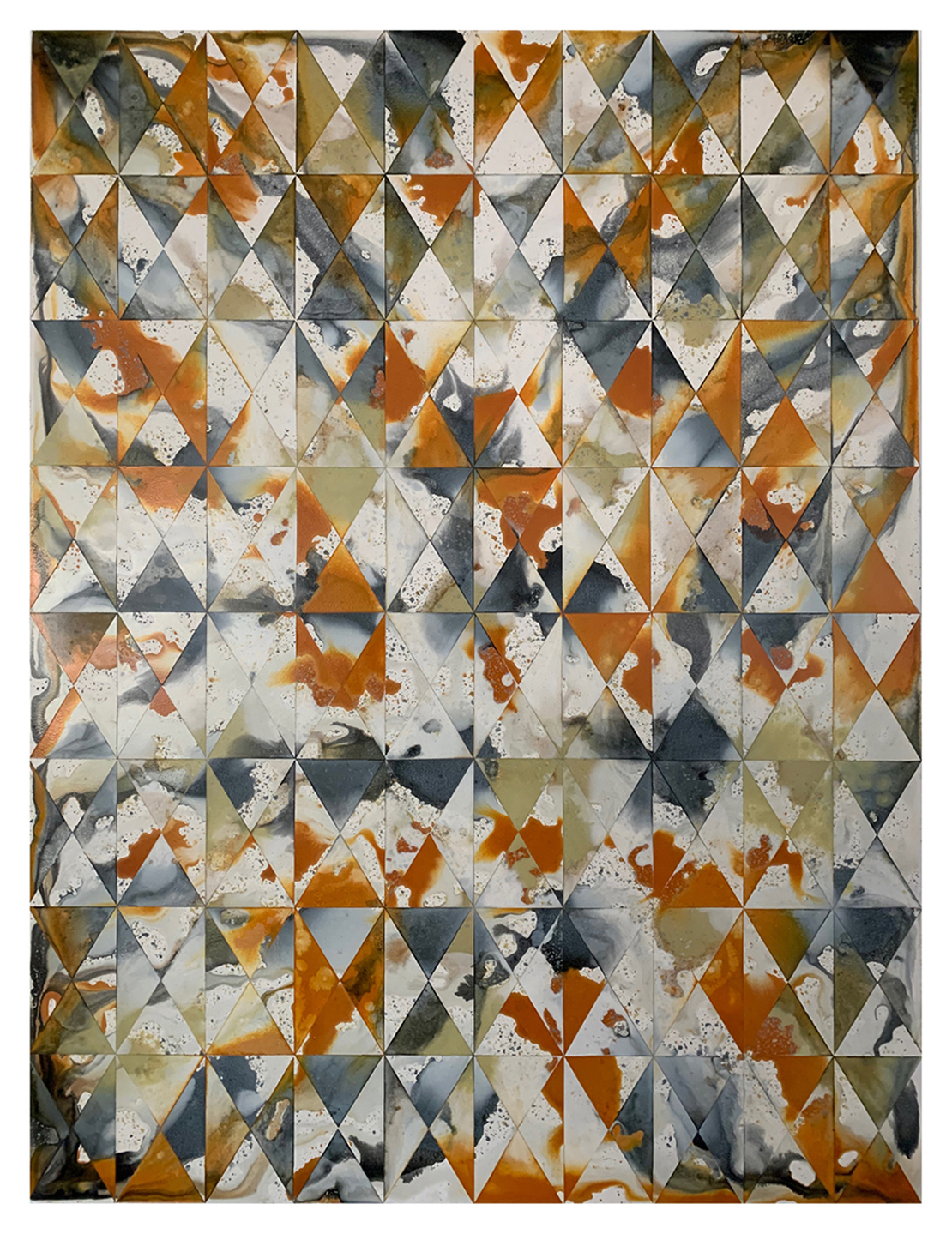
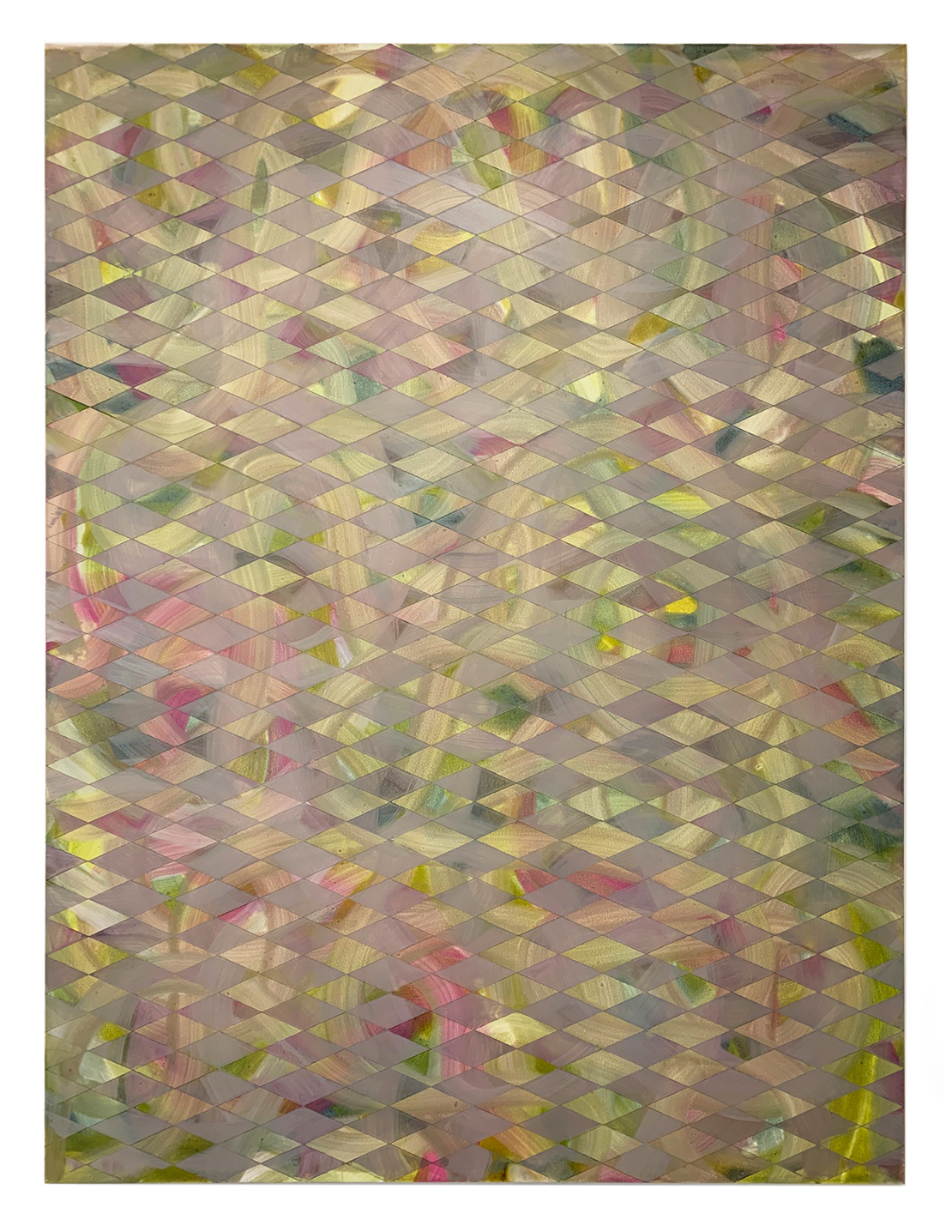
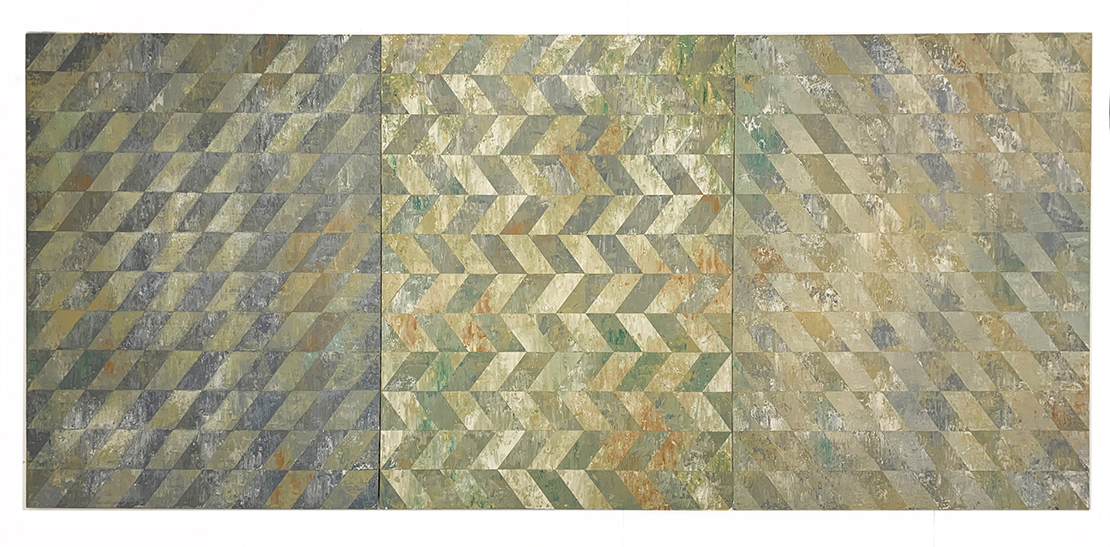
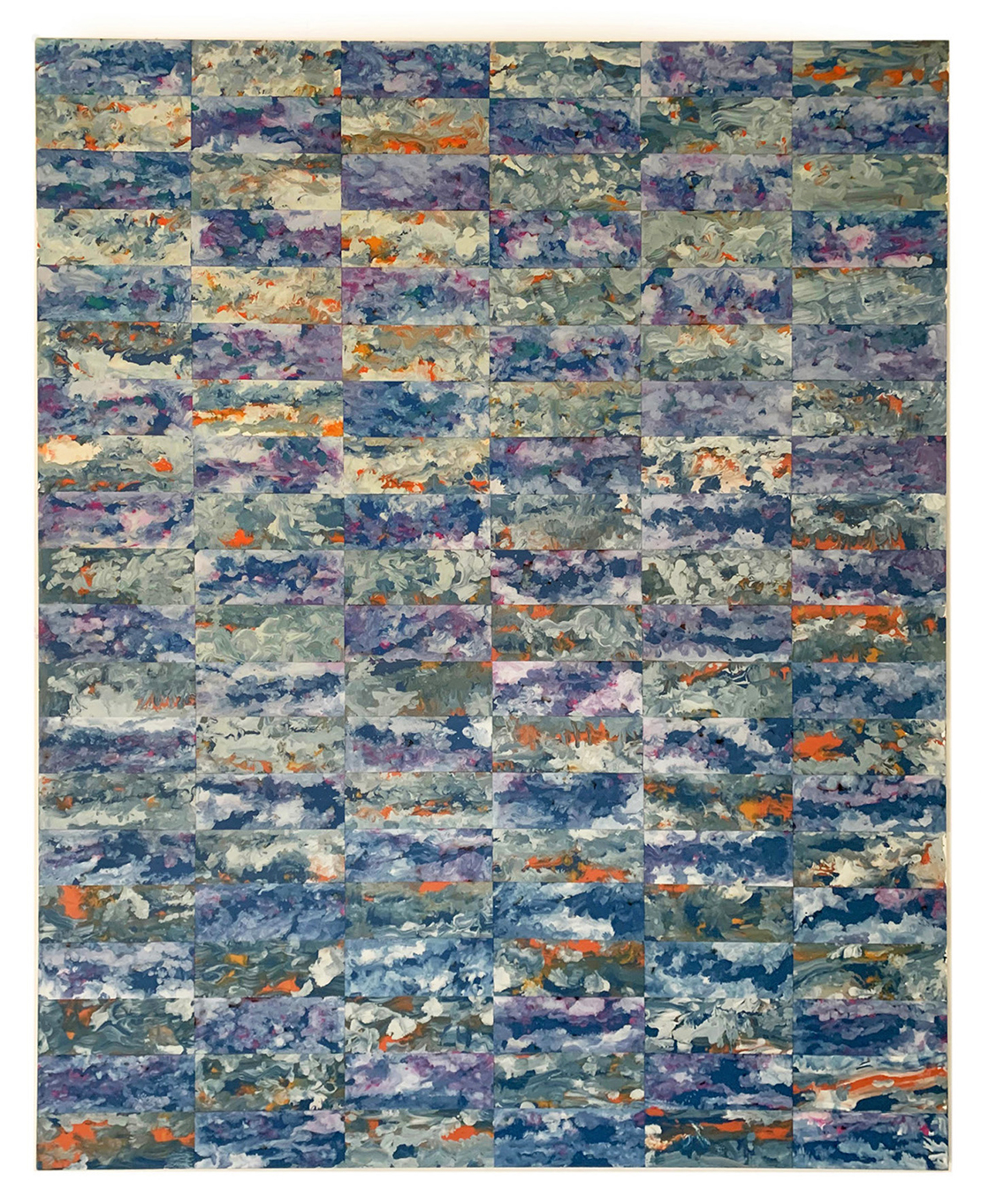
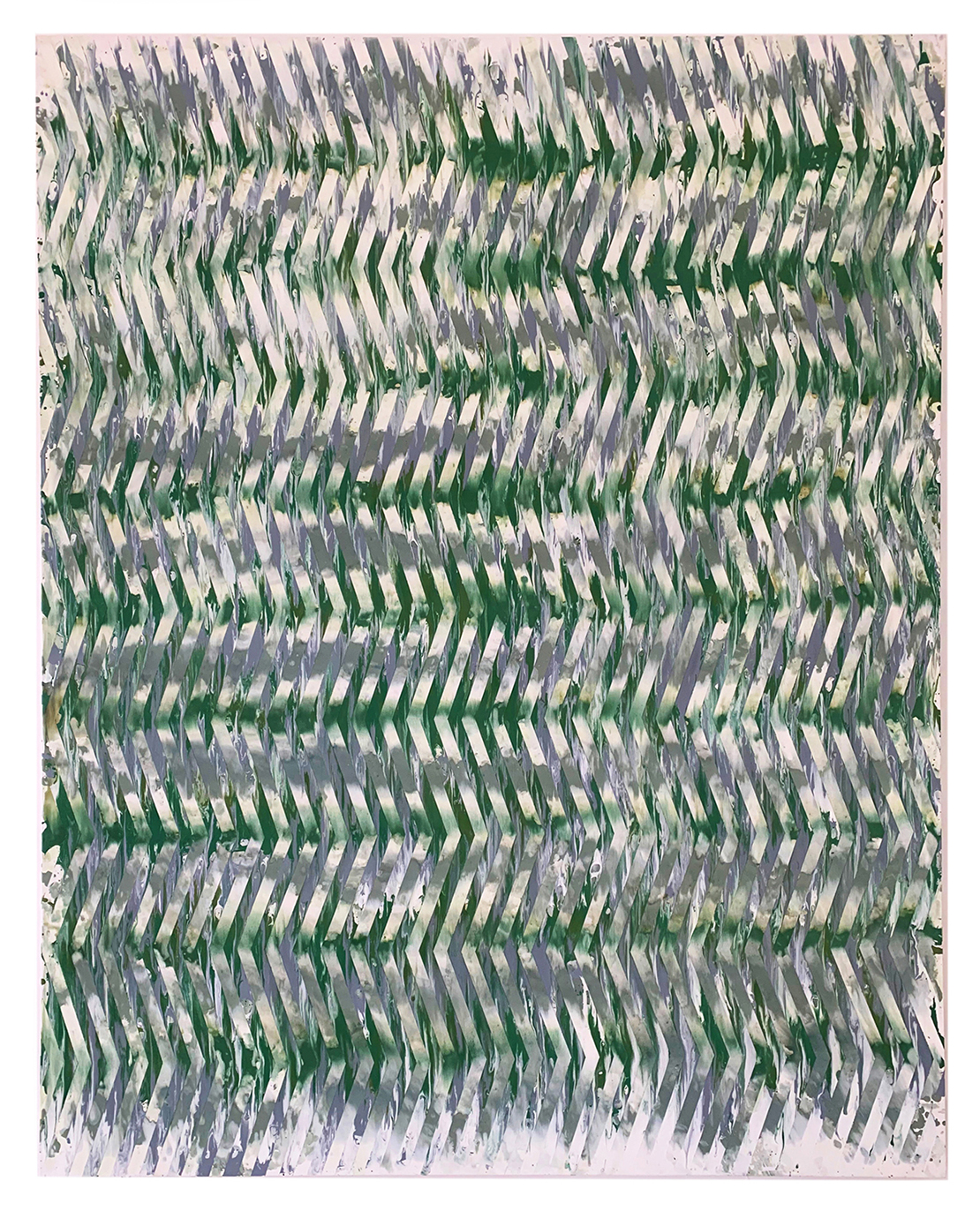
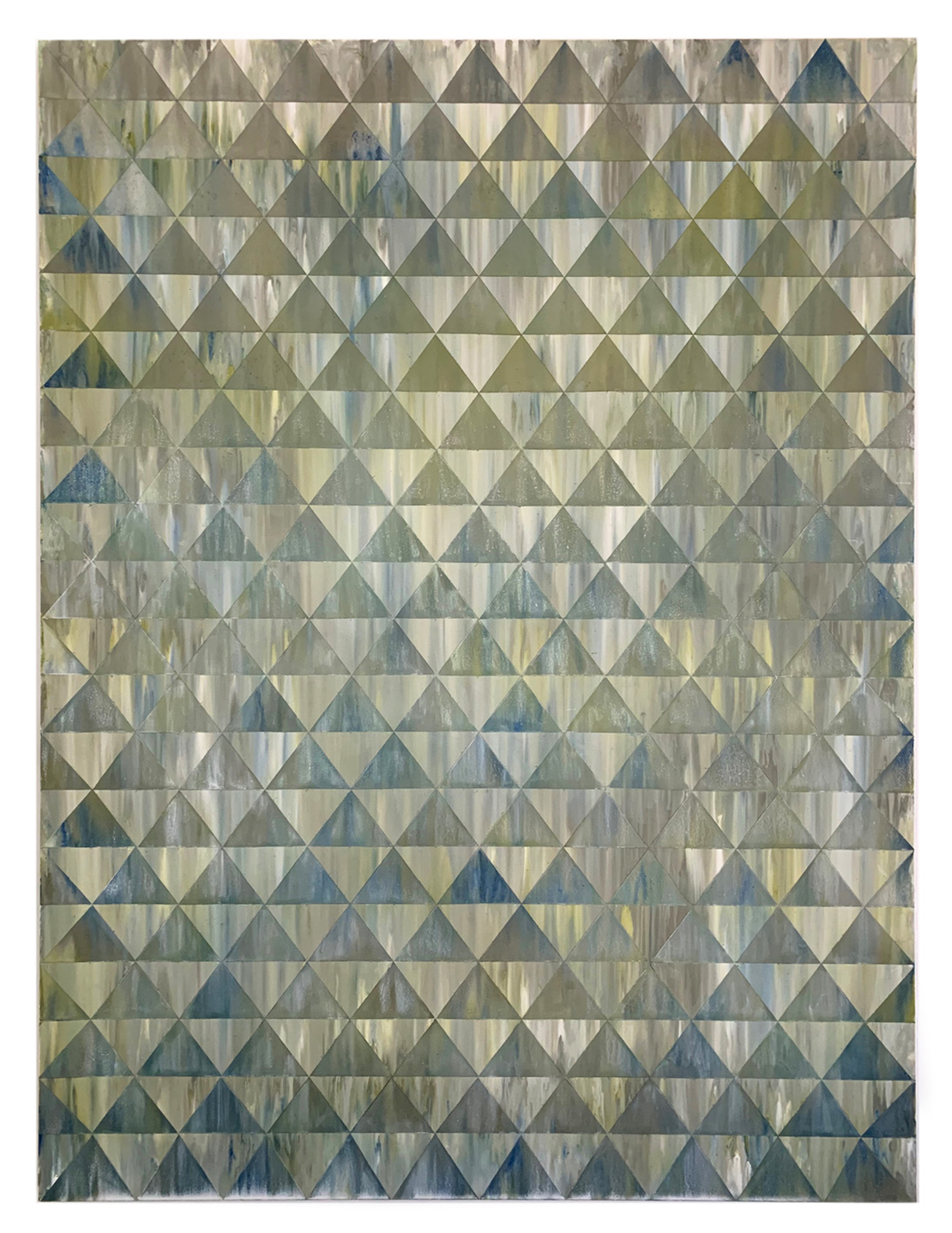
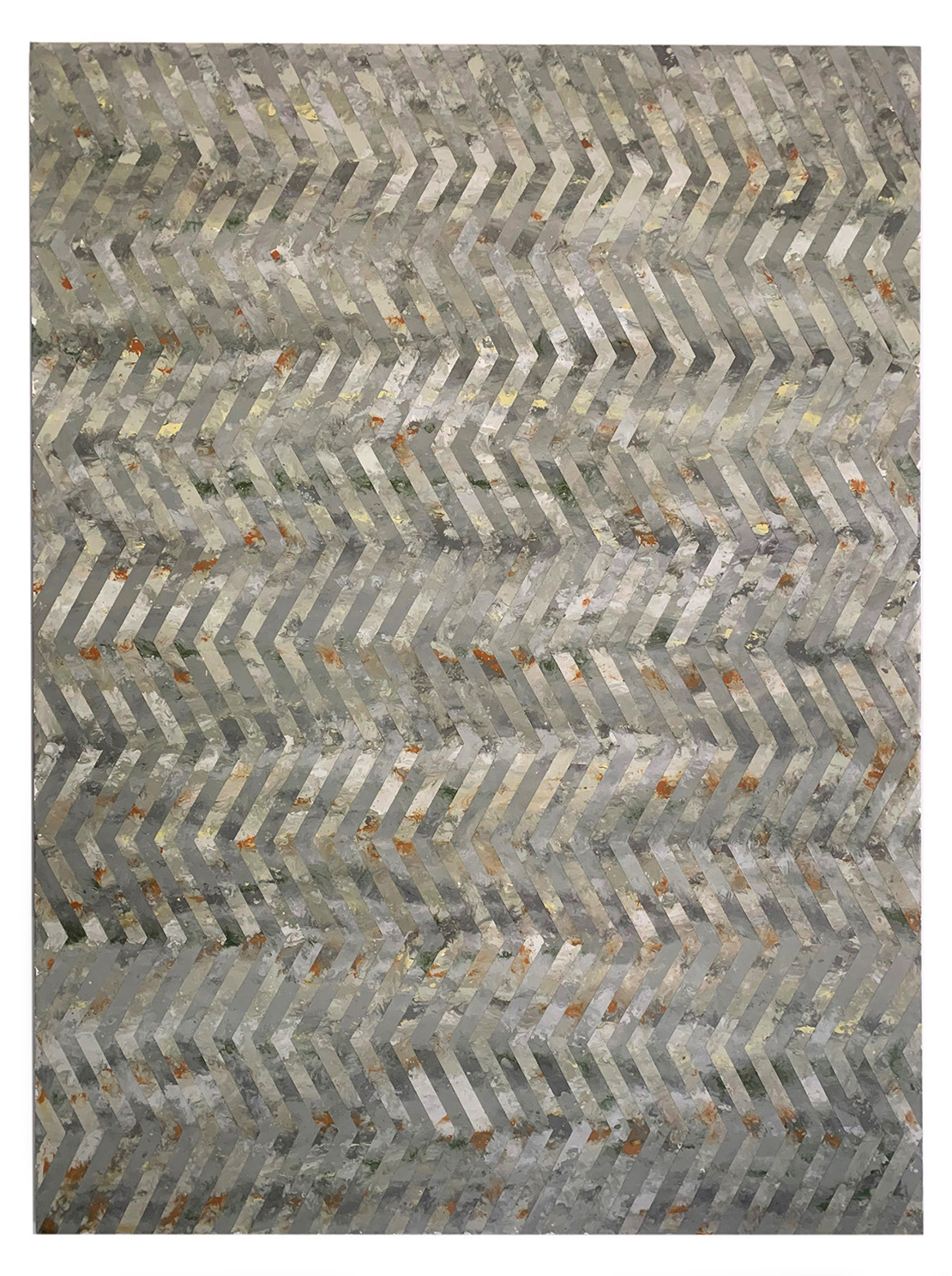
The Kairos Series compresses time by interlacing two separate paintings made on two different occasions. Both painting events appear simultaneously on the same surface and combine snapshots of two distinct moments. They are separated by a geometric system that interrupts yet also completes them, and together form a new painting. Splicing together two distinct instances results in works that are unpredictable and continue my research into the nature of chance and our understanding of time. I am interested in possibilities for new paintings to occur.
The introduction of a geometric system separating the two works makes it possible to look at them differently. What do we see when looking at two paintings simultaneously? Where are the differences? How do the parts relate to the whole? Each fragment is like no other and still, like a DNA sample, carries the whole work in its atomised form. Perception is a creative act not one of passive reception.
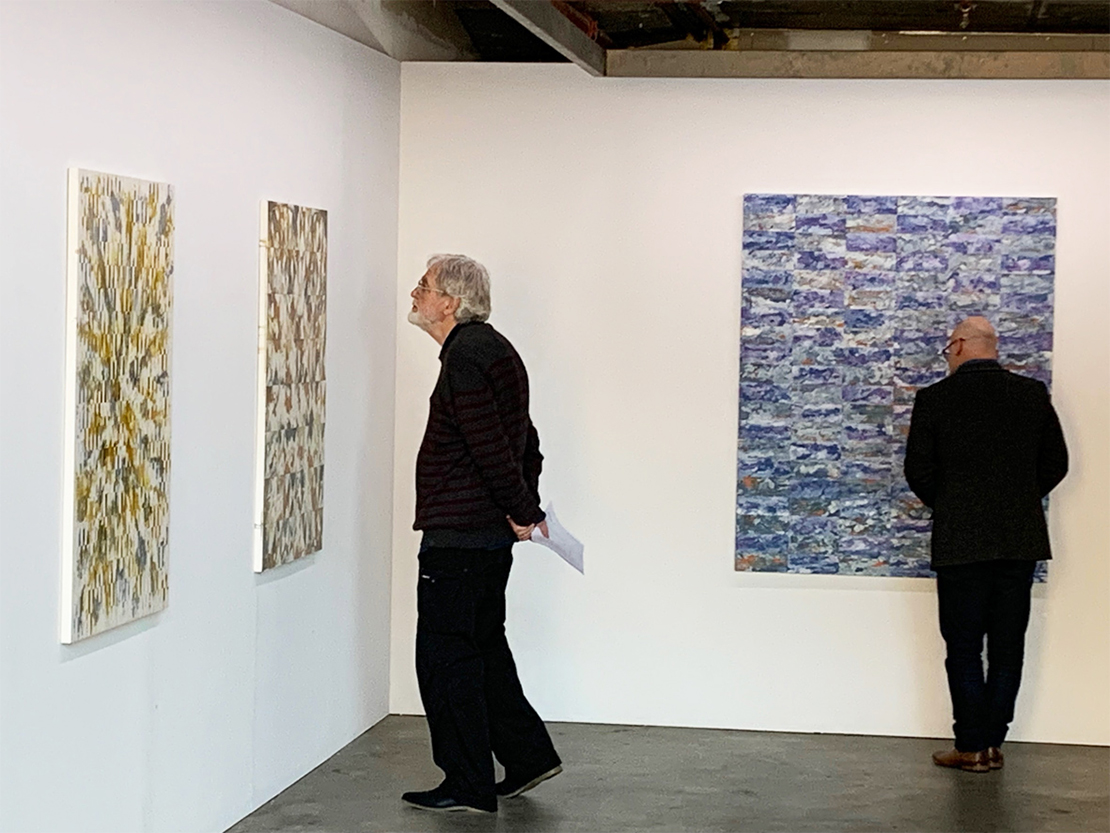
These paintings are an invitation to have a closer look, to enjoy looking, or even get lost in looking.
Images 1-4. Installations views.
Images 5-16. Kairos Series, 2022-2025. Enamel on wood, 120 x 90 x 3 cm.